21 Aug 2026
Examining How Free Game Modes Facilitate Skill Development in Blackjack and Poker Before Transitioning to Real-Money Live Dealer Sessions via Mobile Payment Systems
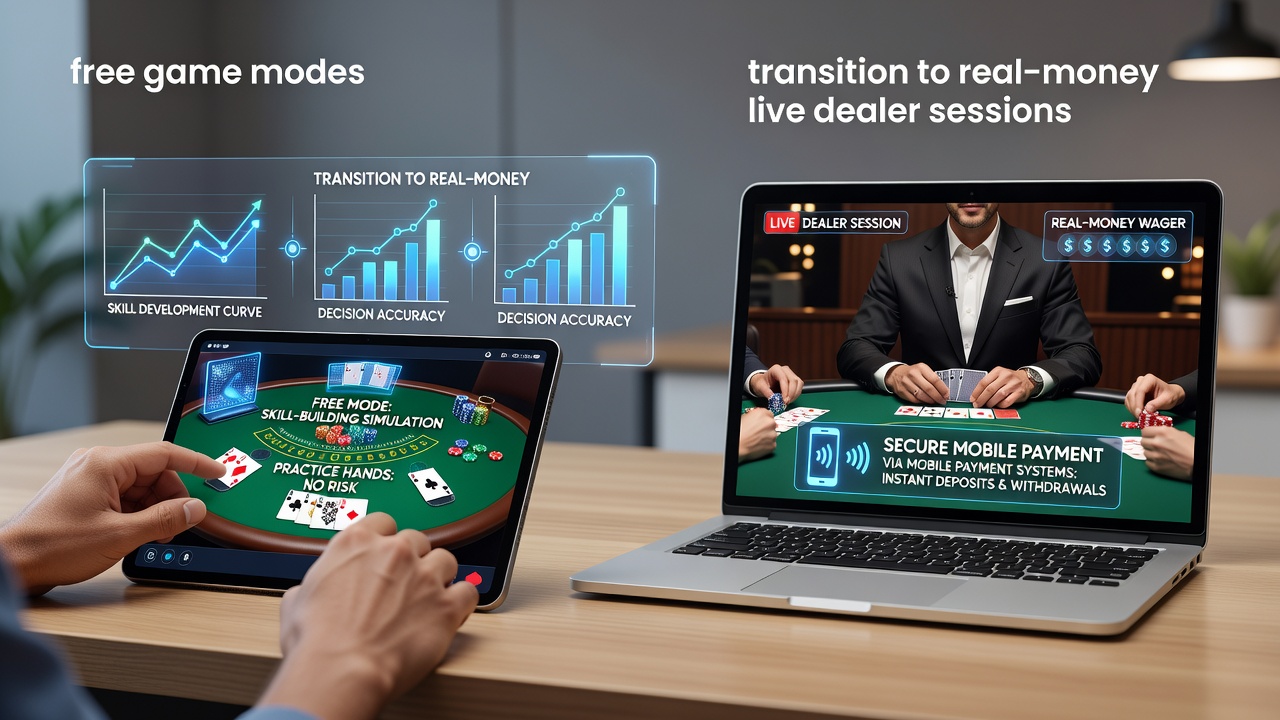
Free game modes in blackjack and poker provide structured environments where players can practice decision-making processes, track card patterns, and refine betting strategies without financial stakes, and these modes operate through digital platforms that mirror real-money interfaces down to shuffle algorithms and payout tables. Observers note that such practice sessions allow repeated exposure to game mechanics, which data from multiple studies indicates builds familiarity with probability distributions and opponent tendencies over time.
Skill Development Through Repetition in Free Modes
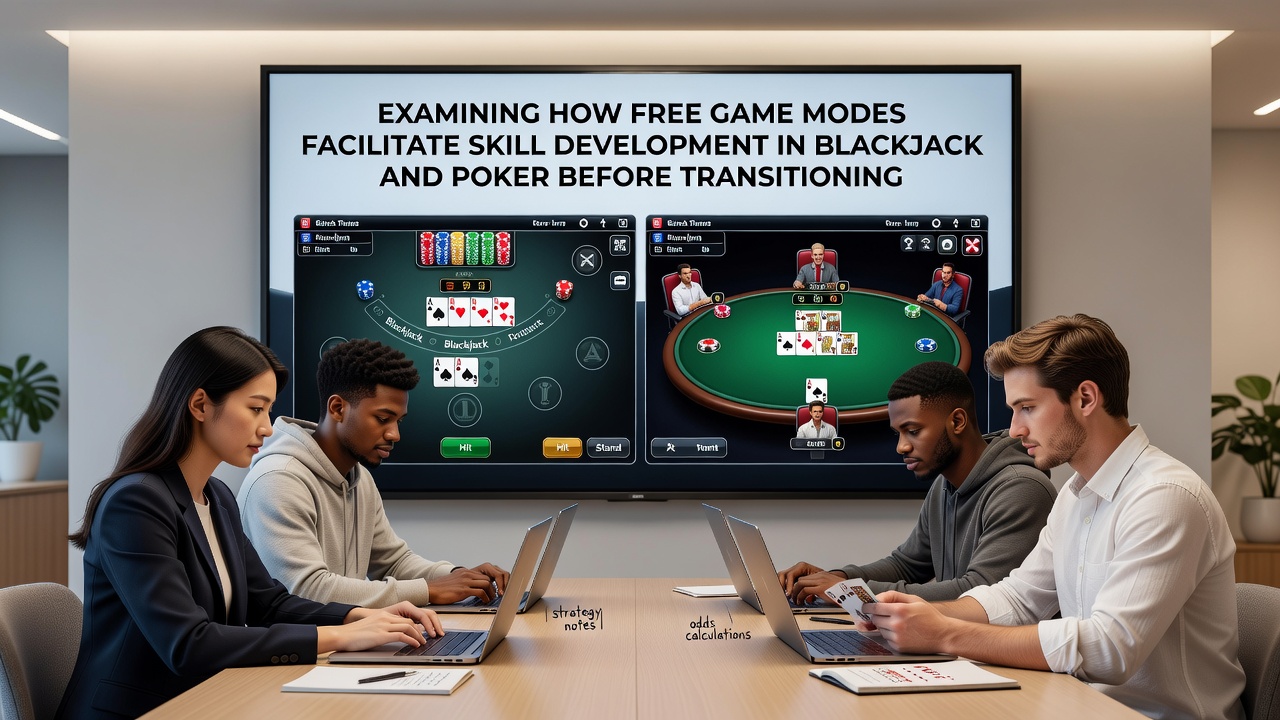
Blackjack free modes enable users to test basic strategy charts against simulated dealers while recording outcomes across thousands of hands, and researchers have documented how this repetition improves adherence to optimal play percentages that range from 99.5 percent in perfect conditions according to established mathematical models. Poker variants in demo formats let participants analyze hand ranges, pot odds calculations, and bluff frequencies in multi-player simulations, where figures from academic reviews show measurable gains in win rates after consistent exposure periods of 50 hours or more. Those who've studied these platforms report that tracking software integrated into many free interfaces highlights errors in real time, which accelerates the shift from intuitive choices to data-driven decisions.
Blackjack Specific Mechanics
In blackjack practice environments, users encounter variations such as single-deck versus multi-deck setups and rule adjustments like dealer hit-on-soft-17, and they can adjust parameters to match upcoming live sessions while monitoring deviation rates from standard charts. Evidence from industry reports reveals that players who log extended sessions in free modes demonstrate lower house-edge exposure once they transition, because they internalize splitting pairs and doubling-down thresholds through direct feedback loops rather than theoretical study alone.
Poker Tactical Refinement
Poker free play tools simulate position-based strategies and continuation betting patterns across Texas Hold'em and Omaha formats, while built-in analytics track fold frequencies and aggression metrics that align with professional training methodologies. Studies conducted through university gaming labs have found that participants using these modes for structured drills improve their expected value calculations in post-flop scenarios, and the absence of monetary pressure encourages experimentation with unconventional lines that later translate to live tables.
Transition Pathways to Live Dealer Environments
Once skill benchmarks are reached in free modes, players move to real-money live dealer sessions where video streams connect them to physical tables staffed by professional dealers, and mobile payment systems handle deposits through encrypted channels that support instant transfers via e-wallets or bank links. Data compiled by regulatory bodies in Canada shows increased adoption of these pathways during 2025 and into August 2026, as operators integrate seamless onboarding that preserves account progress from demo accounts. Live sessions add variables such as timing tells and table dynamics absent from simulations, yet the foundational pattern recognition developed earlier reduces initial variance in decision quality.
Mobile payment integration allows quick funding of accounts without interrupting flow, and operators in regulated markets like those overseen by the Alcohol and Gaming Commission of Ontario have reported that users who complete free mode progressions before depositing maintain higher session retention rates. Alcohol and Gaming Commission of Ontario reports detail how these transitions occur across platforms that verify player age and location prior to enabling cash play.
Role of Mobile Payment Systems in Accessibility
Mobile systems facilitate the shift by processing transactions in seconds through standardized APIs, while maintaining audit trails required under provincial frameworks, and this infrastructure supports both low-stakes entry points and larger transfers as confidence grows. Research from Australian gambling studies indicates that platforms offering tiered access, beginning with free modes and progressing through verified payments, correlate with extended player engagement periods without corresponding spikes in problematic behavior metrics. Live dealer interfaces on mobile devices replicate studio environments with multiple camera angles and chat functions, allowing skill application in real time while payment confirmations appear within the same app window.
Operators track metrics such as hands played per hour and average bet sizing across free and paid environments, which provides operators with aggregated data on skill transfer efficiency. By August 2026, several Canadian provinces had expanded licensing for these combined free-to-paid pathways, reflecting broader trends toward integrated digital ecosystems that prioritize verifiable practice before cash involvement.
Conclusion
Free game modes establish core competencies in blackjack and poker through iterative practice and analytical feedback, after which mobile payment systems enable direct entry into live dealer formats that test those competencies under authentic conditions. Regulatory data from multiple jurisdictions confirms structured progression remains available across compliant platforms, and ongoing platform refinements continue to align simulation tools with live session requirements.